
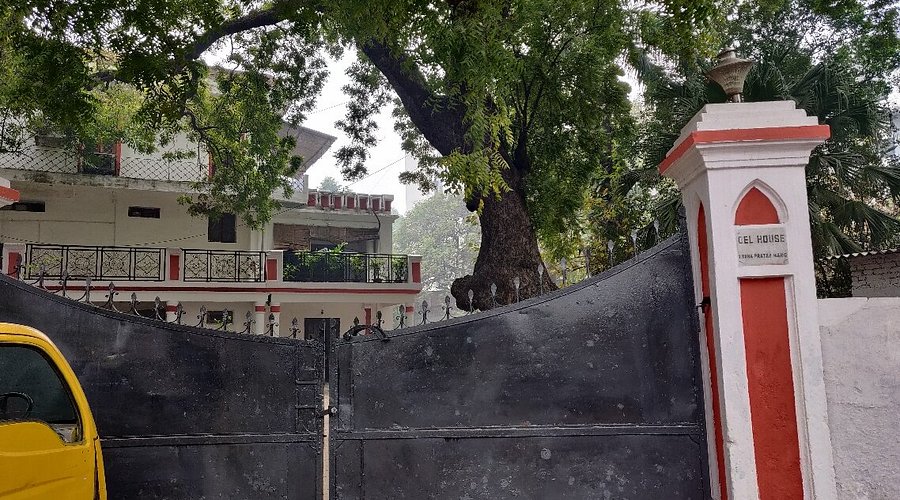
You know how every city has that one building people whisper about? In Lucknow, that’s OEL House. This old mansion sitting on the Lucknow University campus has become one of those places where history, tragedy, and ghost stories have gotten so tangled up together that it’s hard to tell where one ends and the other begins.
What’s in a Name?
Let’s clear up the biggest mystery first: what does “OEL” actually stand for? Walk around Lucknow and ask people, and you’ll hear “Overseas Education Limited.” But here’s the thing – there’s zero evidence that name has anything to do with this building. That’s actually a Singapore-based education company that has nothing to do with Lucknow. The real origin of “OEL” for this house remains a bit of a puzzle, and honestly, nobody seems to have a solid answer. Sometimes the simplest explanations get lost to time.
The Royal Connection That Probably Wasn’t
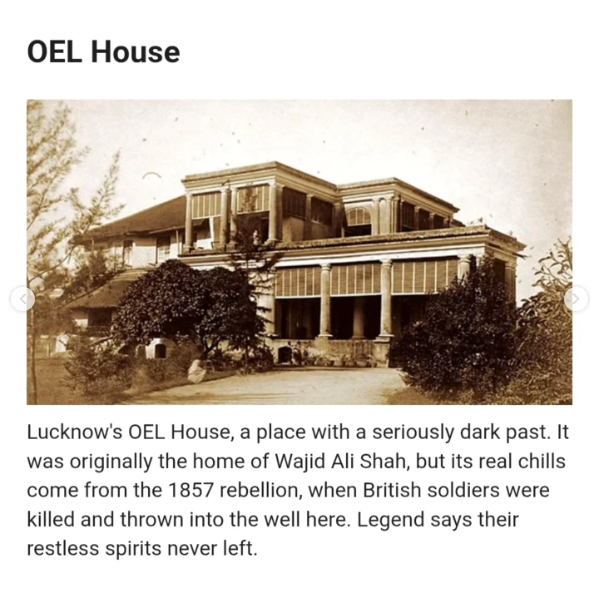
The story goes that Wajid Ali Shah, the last Nawab of Awadh, once lived in this house. It’s a romantic idea, and Wajid Ali Shah certainly had a taste for beautiful buildings – the man built some stunning palaces around Lucknow. But there’s a problem with this claim.
Wajid Ali Shah ruled from 1847 to 1856, and during those nine years, he had Qaiserbagh as his main palace complex. He also built or owned places like Alambagh for his wife Alam Aara, and Sikandar Bagh for another consort. Then in 1856, the British annexed Awadh and sent him packing to Calcutta (now Kolkata), where he spent the rest of his days in Garden Reach until his death in 1887.
So when would he have lived at OEL House? The timeline doesn’t quite add up. That said, could it have been one of his many properties or a residence for someone in his court? Maybe. But calling it “his house” seems like a stretch that’s grown larger with each retelling.
The 1857 Connection: Where Things Get Real
Now this part actually makes sense. During the 1857 uprising – what the British called the Mutiny and Indians call the First War of Independence – Lucknow became one of the bloodiest battlegrounds. The siege of the British Residency lasted months, and fighting spread throughout the city.
Buildings all over Lucknow got caught up in the violence. Sikandar Bagh saw around 2,000 people killed in a single day. The Residency itself became a fortress where hundreds died. So a colonial-era building being used as a defensive position and witnessing deaths? That’s entirely plausible. Lucknow was soaked in blood during those months.
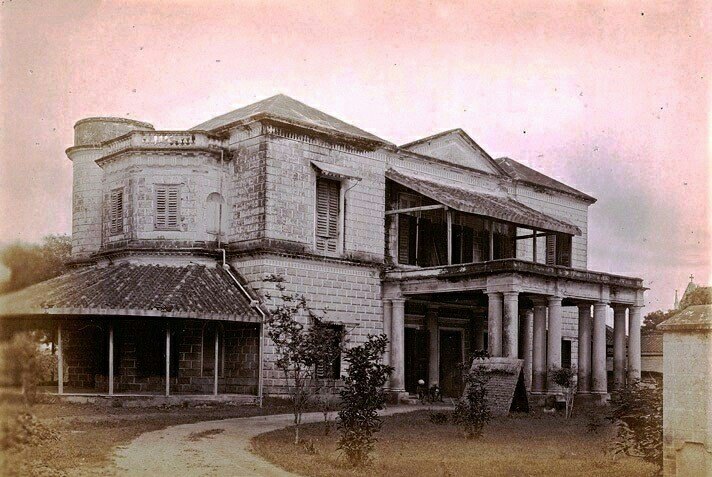
The legend says British soldiers defended OEL House, many died, and their bodies were thrown into a well on the property. Given what happened at other locations in Lucknow during 1857, this isn’t far-fetched at all. Wells became makeshift graves during those chaotic, brutal days.
The Vice Chancellor and the Tragic Well
After India’s independence, OEL House became the residence for the Vice Chancellor of Lucknow University. The university itself is housed in what was once Badshah Bagh, another garden from the Nawabi era, so using old colonial buildings for university purposes made perfect sense.
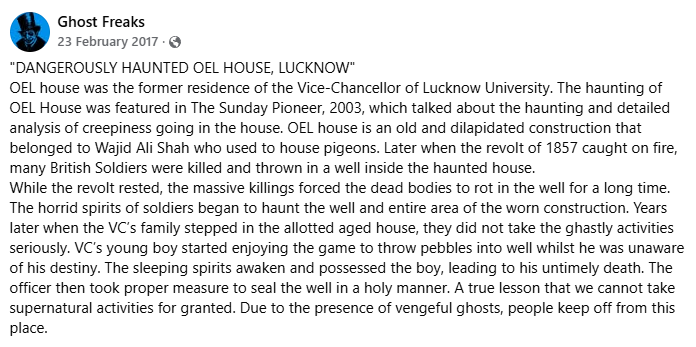
This is where the ghost story really takes off. According to local lore, one of the Vice Chancellors lived there with his family. His young son would play near the old well and throw pebbles into it, not knowing its dark history. Soon after, the boy died under mysterious circumstances – some versions say he fell ill, others claim he was found dead near the well.
Locals believed the boy had disturbed the spirits of those British soldiers from 1857. Frightened by what happened, religious ceremonies were performed, and the well was permanently sealed. To this day, people say you can hear footsteps, whispers, and feel cold spots around the property, especially at night.
Can We Verify Any of This?
Here’s where things get tricky. I couldn’t find any newspaper reports, university records, or official documentation about a Vice Chancellor’s son dying at OEL House. That doesn’t mean it didn’t happen – records get lost, families keep tragedies private, and rural newspapers from decades ago aren’t all digitized. But it does mean we should treat this as local folklore rather than confirmed fact.
What we do know for certain:
- The building exists and is part of Lucknow University
- It’s located at Hasanganj, near the university campus
- 1857 brought enormous violence to Lucknow, and many buildings witnessed deaths
- The property has a reputation that keeps people talking
What People Experience Today
Walk around Lucknow and talk to locals, and you’ll hear stories. University students claim they’ve heard strange sounds coming from the building. People who live nearby say they avoid passing it after dark. Some report seeing shadows moving in windows when the building should be empty.
On Tripadvisor and local forums, you’ll find scattered mentions of OEL House, though surprisingly few detailed personal accounts. Most discussion comes from “haunted places in Lucknow” lists on travel blogs and paranormal websites. That’s actually pretty typical – truly haunted reputation or not, places develop mythologies that get repeated until everyone “knows” the stories even if nobody’s actually experienced anything firsthand.
The Psychology of Haunted Places
Think about it: you’ve got an old building with genuine historical tragedy nearby (1857 definitely happened in Lucknow), a sealed well (always spooky), whispered stories about a child’s death (heartbreaking), and colonial-era architecture (inherently atmospheric). Mix all that together, add nightfall, and your imagination does the rest.
Lucknow has several spots with similar reputations – Begum Kothi where freedom fighters died, Bara Imambara with its famously confusing maze, Dilkusha Garden with its own murder legends, and Balrampur Hospital supposedly built on burial grounds. Each has its kernel of historical truth wrapped in layers of storytelling.
Visiting OEL House Today
The building isn’t really set up for ghost tours or casual visitors. It’s on university property, so you can’t just wander in like you might with some other historical sites in Lucknow. The university understandably doesn’t want hordes of paranormal enthusiasts disturbing the peace or whatever official functions happen there now.
Most “haunted place” guides will tell you to visit after sunset for maximum spookiness, but practically speaking, that’s when you’re least likely to actually get access. The area closes down, and wandering around university buildings at night is generally frowned upon (and possibly trespassing).
The Bigger Picture
OEL House sits in a city absolutely packed with history. Lucknow under the Nawabs was a center of culture, art, and architecture. The uprising of 1857 left scars that are still visible in the ruins and rebuilt structures around the city. British colonial rule transformed the urban landscape. All of that history layers on top of itself, creating places where the past feels almost tangible.
Whether you believe in ghosts or not, there’s something about walking through Lucknow’s old quarters that makes you feel the weight of everything that happened there. The Residency still has cannonball damage in its walls. Sikandar Bagh has plaques commemorating the slaughter. These aren’t just stories – real people lived, fought, and died in these places.
Separating Fact from Fiction
So what’s actually true about OEL House? Best guess:
- It’s a real building associated with Lucknow University
- The area saw violence during 1857 (virtually all of Lucknow did)
- There’s a well that’s reportedly sealed
- Local legends about deaths and hauntings have built up over decades
- The Wajid Ali Shah connection is probably exaggerated or mistaken
- The Vice Chancellor’s son story can’t be verified but persists in local telling
- “Overseas Education Limited” as the source of “OEL” appears to be a false etymology
That might be less satisfying than a clear-cut ghost story, but it’s honest. History and legend get mixed up all the time, especially when you’re talking about events from 150+ years ago in a city that’s been through as much upheaval as Lucknow has.
FAQs
Has anyone died there recently?
Not that’s been reported publicly. The stories center around events from decades ago – the Vice Chancellor’s son incident and the 1857 uprising. If there had been recent deaths or dramatic incidents, you’d expect them to make local news, especially given the building’s existing reputation. The lack of recent reports suggests either nothing dramatic has happened, or incidents are being kept very quiet.
Do students at Lucknow University talk about OEL House?
Based on scattered online mentions, yes, but not as much as you might expect given its haunted reputation. Some students mention hearing about it, others say they avoid the area at night, but there isn’t a massive volume of firsthand student accounts floating around social media or forums. This could mean the stories are more prevalent among older locals than current students, or students simply don’t pay much attention to the legends while going about their daily campus life.
Why is the well so important to the story?
Wells carry a lot of symbolic weight in Indian folklore and history. During 1857, wells became tragic markers of violence – there are documented cases across North India of bodies being disposed of in wells during the chaos. The most famous is probably the Bibighar well in Kanpur. So a sealed well with rumored bodies inside taps into very real historical trauma. Plus, wells are inherently eerie – dark, deep, mysterious spaces that suggest hidden depths both literal and metaphorical.
Are there any books or documentaries about OEL House specifically?
Not that focus solely on OEL House. It gets mentioned in broader collections about haunted places in India or Lucknow’s spooky locations, but there’s no dedicated investigative book or documentary that I could find. Most information comes from travel blogs, paranormal websites, and local storytelling tradition. This is actually pretty common for urban legends – they live more in oral tradition and online listicles than in serious documentation.
Is it disrespectful to visit these places as “haunted tourism”?
That’s a thoughtful question. Places like OEL House, Sikandar Bagh, and the Residency are connected to real violence and real deaths. Treating them purely as spooky entertainment can feel dismissive of the actual suffering that happened there. If you visit, approach with some respect for the history – these aren’t just Halloween props, they’re places where people experienced genuine tragedy. Learn about the 1857 uprising, understand what happened, and treat it as a historical site that happens to have ghost stories rather than just a thrill ride.
What’s the scariest reported experience at OEL House?
The most commonly repeated story is the Vice Chancellor’s son dying mysteriously, but in terms of visitor experiences, reports are pretty vague – footsteps, whispers, cold spots, shadows. Nothing too dramatic like physical attacks or possessions. Most haunted place accounts follow this pattern: atmospheric unease rather than horror movie theatrics. The “scariest” part is probably the psychological effect of knowing the history and being in that space at night.
Can paranormal investigation teams visit OEL House?
In theory, they’d need permission from Lucknow University since it’s on their property. Whether the university would grant such permission is another question entirely. Universities generally prefer focusing on education rather than becoming paranormal tourism destinations. International ghost hunting shows haven’t featured OEL House, which tells you something about either the access restrictions or the lack of compelling documented activity.
How does OEL House compare to other haunted places in India?
It’s firmly in the “local legend” category rather than nationally famous like Bhangarh Fort in Rajasthan or Delhi’s Lothian Cemetery. OEL House is more of a Lucknow-specific story that people in the city know about but hasn’t broken into mainstream Indian consciousness the way some other locations have. Part of that might be the access issue – places that are easier to visit and photograph tend to become more famous in our social media age.
Are there any ghost stories from before 1857?
Not that have survived in the popular telling. The narrative firmly centers on the 1857 violence. This makes sense because that was such a watershed moment for Lucknow – the uprising, the siege, the aftermath fundamentally changed the city. Earlier Nawabi-era stories about the property, if they existed, have been overshadowed by the more dramatic and tragic events of the rebellion.
What do locals actually think about all this?
Mixed bag. Some people genuinely believe the place is haunted and won’t go near it. Others roll their eyes at what they see as superstition amplified by tourism and internet storytelling. Older residents might have more investment in the stories, having grown up hearing them. Younger, more skeptical folks might view it as entertaining folklore rather than literal truth. Like most ghost stories, belief correlates pretty strongly with personal worldview and cultural background.
Should I hire a guide to learn about OEL House?
If you’re interested in Lucknow’s 1857 history and haunted locations broadly, a knowledgeable local guide could be valuable. They can take you to multiple sites, provide historical context, and share stories you won’t find online. Just manage expectations about OEL House specifically – even a good guide can’t get you inside or provide much beyond what you’d see from the street. Focus on getting the broader historical tour, with OEL House as one stop among many.
The truth is, we love ghost stories because they give us a way to process tragedy and connect with the past. Whether the specific details about OEL House are accurate or not, the building has become a vessel for memories of the real violence and loss that Lucknow experienced. Sometimes the story we tell matters as much as the facts underneath it.
If you’re interested in Lucknow’s genuinely haunted history, focus on the verified stuff: visit the Residency and see the siege damage, walk through Sikandar Bagh where thousands died, explore Bara Imambara’s incredible architecture. Those places will give you enough to think about without needing to embellish. And if you happen to pass by OEL House while you’re there? Well, you’ll know the stories now, and you can decide for yourself what to believe.